An Introduction To Digital Computer Design by V. Rajaraman, T. Radhakrishnan
Book Summary:
This highly acclaimed, well established, book now in its fifth edition, is intended for an introductory course in digital computer design for B.Sc. students of computer science, B.Tech. students of computer science and engineering, and BCA/MCA students of computer applications. A knowledge of programming in C or Java would be useful to give the student a proper perspective to appreciate the development of the subject.
The first part of the book presents the basic tools and developes procedures suitable for the design of digital circuits and small digital systems. It equips students with a firm understanding of logic principles before they study the intricacies of logic organization and architecture of computers in the second part.
Besides discussing data representation, arithmetic operations, Boolean algebra and its application in designing combinatorial and sequential switching circuits, the book introduces the Algorithmic State Machines which are used to develop a hardware description language for the design of digital systems.
The organization of a small hypothetical computer is described to illustrate how instruction sets are evolved. Real computers (namely, Pentium and MIPs machines) are described and compared with the hypothetical computer. After discussing the features of a CPU, I/O devices and I/O organization, cache and virtual memory, the book concludes with a new chapter on the use of parallelism to enhance the speed of computers. Besides, the fifth edition has new material in CMOS gates, MSI/ALU and Pentium5 architecture. The chapter on Cache and Virtual Memory has been rewritten.
Audience of the Book :
This book Useful for Computer Science, IT And MCA Student Table of Contents:
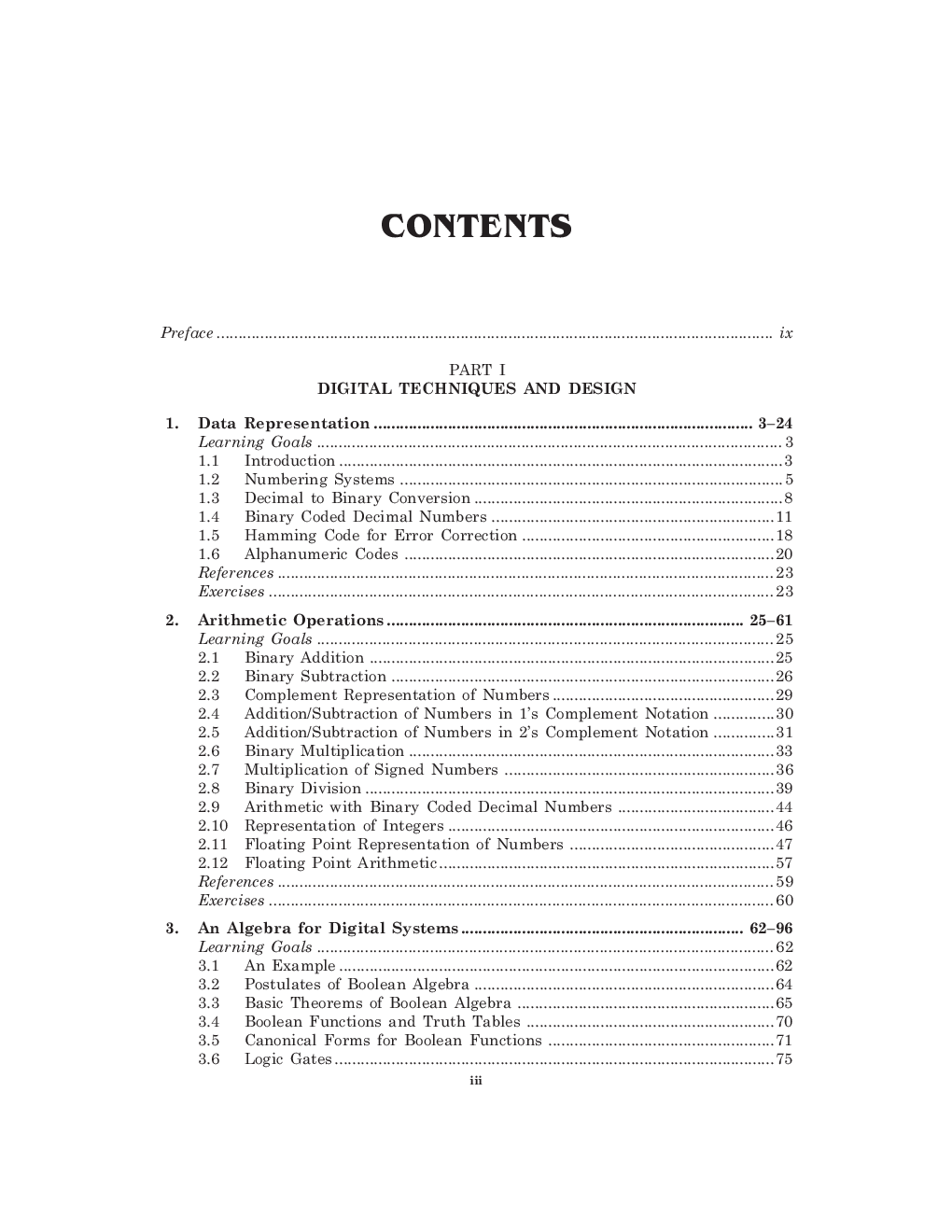
Preface
Part I: DIGITAL TECHNIQUES AND DESIGN
1. Data Representation
2. Arithmetic Operations
3. An Algebra for Digital Systems
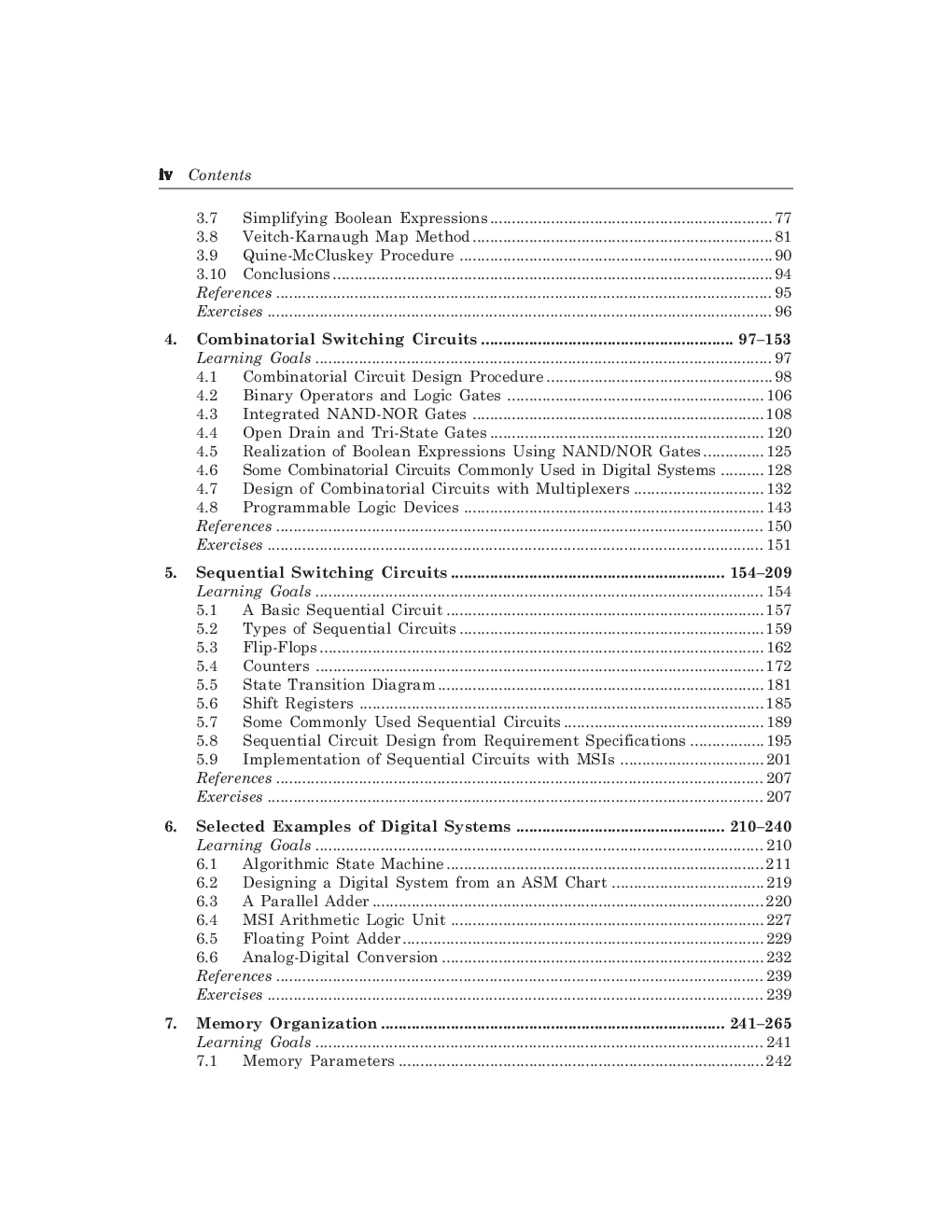
4. Combinatorial Switching Circuits
5. Sequential Switching Circuits
6. Selected Examples of Digital Systems
7. Memory Organization
Part II: LOGICAL ORGANIZATION AND ARCHITECTURE
8. Software Layers in a Computer System
9. A Small Computer Organization
10. Central Processing Unit
11. Input-Output Devices
12. Input-Output Organization
13. Cache and Virtual Memory
14. Parallelism in Computing
Appendix: Decision Table Terminology
Index